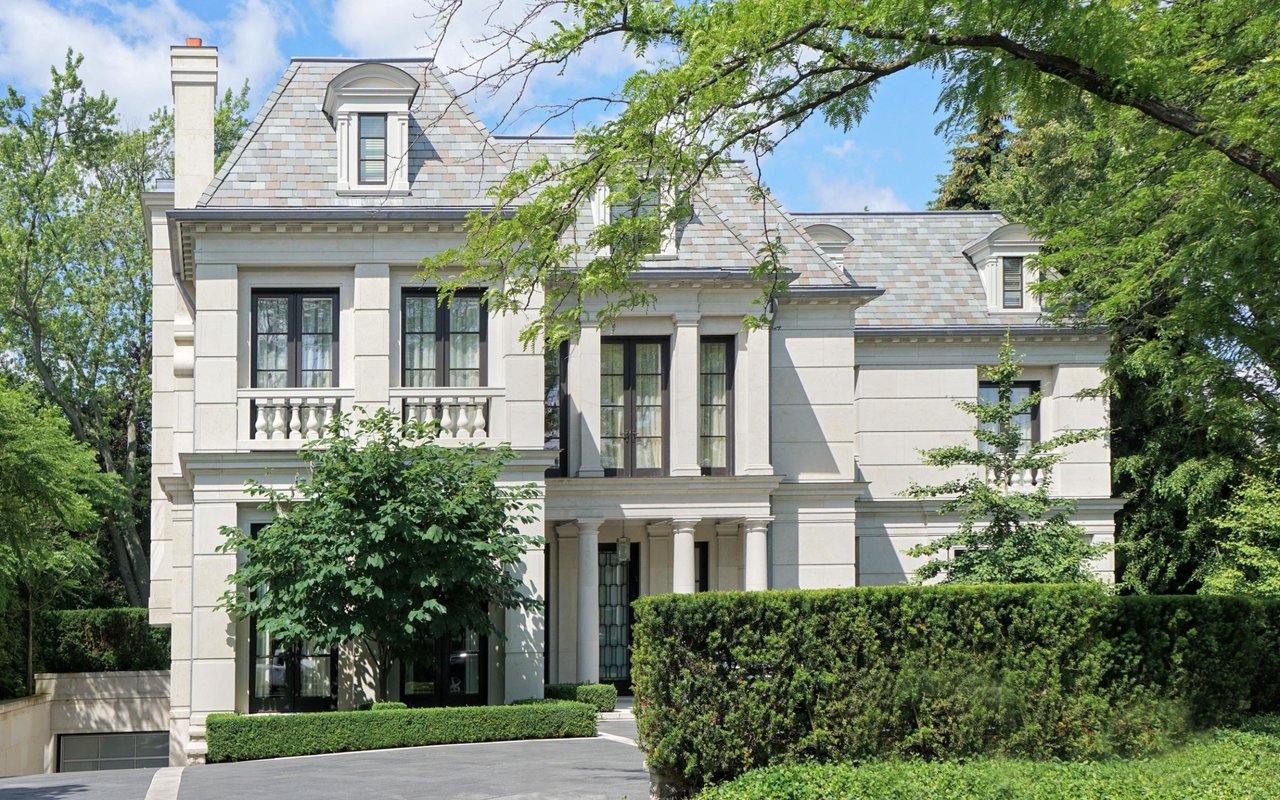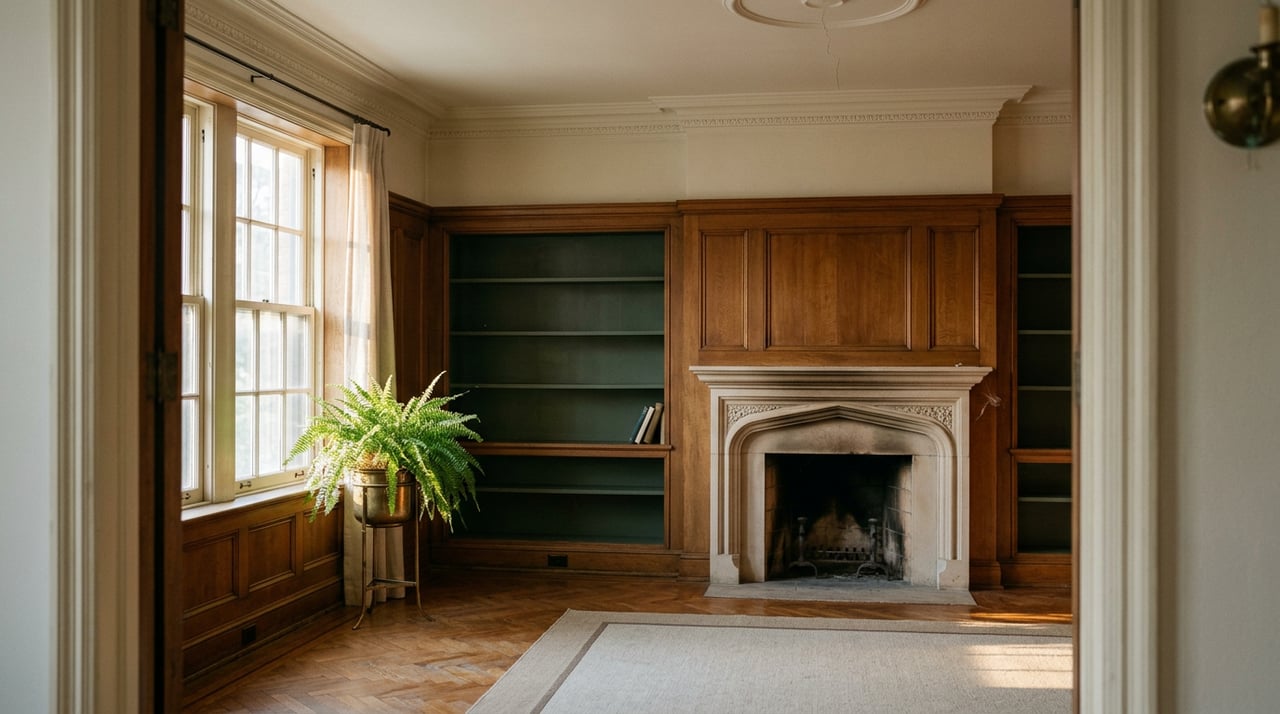
In 2023, Bill Farley, the former CEO of Fruit of the Loom, listed his Gold Coast co-op for almost $16 million. Nobody bit. By the summer of 2025 the asking price had fallen below $8 million, and once it did, the listing agent said interest "jumped." That is not a story about a bad apartment. It is a story about a narrow pipe. A property with real name recognition, in a building with real pedigree, needed to cut its price by more than half before enough qualified buyers could actually reach it.
That gap between what a Gold Coast co-op looks like on paper and what it can actually fetch shows up at every price point in the neighborhood, not just the eight-figure end. Walk the blocks around East Lake Shore Drive and State Parkway and you will find one-bedroom co-ops asking well under $300,000, a fraction of what a comparable condo two doors down would command. The instinct is to assume the co-op is the lesser property: older systems, tired finishes, a building that time forgot. Sometimes that is true. But the bigger reason co-ops trade at a discount has almost nothing to do with the apartment itself. It has to do with how few people are financially and procedurally able to buy it.
The Number That Makes Co-ops Look Like a Bargain
As of the first week of August 2026, Redfin counted 67 condos for sale in the Gold Coast at a median listing price of $585,000, with most homes on the market for 55 days. Set a $250,000 one-bedroom co-op against that backdrop and it looks like an outlier, the kind of listing a sharp buyer should jump on before the market corrects itself.
The correction never comes, because the price is not a mispricing. It is the market clearing at the size of the buyer pool a co-op board and a handful of specialty lenders will allow through the door. A condo at that price point can be bought by anyone with a conventional mortgage, an FHA loan if the building qualifies, or cash. A co-op at the same price can only be bought by someone who clears board approval and can find one of the limited number of lenders willing to write a share loan in the first place. Fewer eligible buyers means a lower clearing price, independent of what the apartment actually offers.
Same Architect, Different Rules
The clearest proof that this is a financing story, not a quality story, sits in the buildings themselves. Several of the Gold Coast's most storied addresses share an architect and an era, yet ended up with completely different ownership structures.
| Building | Architect | Built | Ownership today | The wrinkle |
|---|---|---|---|---|
| 209 E. Lake Shore Drive | Benjamin Marshall | 1929 | Co-op | Purchases must be made entirely in cash, no mortgage financing permitted |
| 999 N. Lake Shore Drive | Benjamin Marshall | pre-war, beaux-arts | Co-op, 27 units | One of the smallest owner pools on the lakefront by unit count alone |
| 1550 N. State Parkway | Benjamin Marshall | 1911 | Converted to condominium in 1977 | Same architect, same decade, opposite ownership structure |
| 1500 N. Lake Shore Drive | Rosario Candela | 1927 | Co-op, 57 units | A Prohibition-era bar hidden behind library paneling surfaced when a unit here went up for sale |
| 70 E. Cedar Street | unspecified | 1926 | Converted to co-op in 1949 | Started life as a rental building, only became a cooperative more than two decades later |
Benjamin Marshall designed both 209 E. Lake Shore Drive and 1550 N. State Parkway, and both went up within two decades of each other in the same neighborhood. One still requires cash and board approval for every transaction. The other shed its co-op structure entirely in 1977, presumably to widen its buyer pool and simplify resale. The architecture, the block, the era: none of that determined the outcome. A decision made by a board, sometimes generations ago, did.
The Financing Plumbing Nobody Mentions at the Open House
Ask a lender why a Gold Coast co-op is priced the way it is, and the honest answer starts with what a co-op purchase actually is. Buyers are not receiving a deed to real property. They are buying shares in a corporation that owns the building, along with a proprietary lease granting occupancy rights, according to Illinois Legal Aid's overview of how cooperative housing works in the state. That structure means a conventional mortgage does not apply. Instead, buyers need a share loan, and not every lender offers one.
Even among lenders who do, terms are tighter than what a condo buyer would see. Conventional co-op financing commonly caps loans at 50 to 70 percent of the purchase price, which pushes the buyer pool toward people with substantial liquid cash. Some buildings, like 209 E. Lake Shore Drive, skip financing altogether and require the full purchase price in cash. FHA and VA loans are not an option for co-ops under any circumstances, a hard line that exists regardless of how well-run or well-capitalized a given building is.
There is also a tax wrinkle that surprises buyers who assume "shares, not real estate" means an easier closing. Chicago's Department of Revenue has ruled that a transfer of a cooperative unit is subject to the city's Real Property Transfer Tax the same as a deeded sale, whether the transfer happens through a stock sale or a beneficial interest in a land trust. Buying into a co-op does not sidestep the tax exposure that comes with buying real estate in the city. It just changes the paperwork that gets you there.
What the Board Is Actually Allowed to Ask
Financing narrows the pool before a buyer ever meets the board. The approval process narrows it further. Illinois attorney Mark R. Rosenbaum, a principal at the Chicago law firm Fischel Kahn, drew the line clearly in comments to CooperatorNews: condo associations generally have no true right of approval, only a right of first refusal, meaning a board that dislikes a buyer can step in and purchase the unit on the same terms rather than block the sale outright.
Co-op boards operate under a different standard. They can approve or reject an applicant for nearly any reason, or no stated reason, as long as the decision does not violate fair housing protections. The federal Fair Housing Act and the Illinois Human Rights Act prohibit rejecting an applicant based on race, religion, national origin, sex, disability, familial status, or several other protected categories, and boards are barred from asking about any of them directly during an interview. Outside those limits, a board evaluating financial strength, references, and general fit has wide discretion, and that discretion is part of what keeps the buyer pool, and the price, smaller than it would otherwise be.
Before You Fall for a Listing
A co-op that checks every box on a listing sheet can still fall apart in week six if the financing or the paperwork was not lined up early. Before writing an offer on a Gold Coast co-op, it is worth confirming:
- Whether the building allows financing at all, and if so, what loan-to-value ratio the board's approved lenders will write
- How many years of financial statements, board minutes, and reserve studies the building will release, and whether a recent reserve study exists
- What the proprietary lease says about subletting, owner-occupancy minimums, and any flip tax or transfer fee due at resale
- Whether the monthly maintenance charge bundles in property taxes and any underlying building mortgage, since that changes how the true monthly cost compares to a condo's assessment plus separate tax bill
- How long board package preparation and interview scheduling typically take in that specific building, since timelines can run four to eight weeks before a closing date is even possible
None of these questions show up on a listing photo. All of them determine whether the apartment behind the photo is actually reachable.
A Few Questions Worth Answering
Does paying cash mean I can skip board approval? No. Cash removes the lender from the equation but the board still reviews and can reject any buyer, cash or financed, under the same discretionary standard.
Are property taxes handled differently in a co-op? Yes. Co-op owners do not receive an individual Cook County tax bill. The corporation pays the building's taxes and passes along each shareholder's portion through the monthly maintenance charge, along with debt service if the building carries an underlying mortgage.
If a board rejects me, can I find out why? Not necessarily. Boards generally are not required to disclose a reason unless a fair housing violation is alleged, and proving that a rejection was discriminatory rather than discretionary is difficult in practice.
The Gold Coast's co-op stock is not a bargain bin of forgotten buildings. Film critic Gene Siskel's former Gold Coast co-op has also come to market, the kind of provenance that never shows up in a comparable-sales report. What separates these buildings from the condo market next door is not the walls. It is who is allowed to walk through the door, and on what terms. Understanding that distinction before falling for a listing is the difference between a smooth closing and a deal that dies in the sixth week over financing nobody flagged at the showing.
If you are weighing a Gold Coast co-op against a condo, or trying to figure out which building's rules actually fit how you plan to live and finance the purchase, The VC Team can walk through the building-specific details before you write an offer. Start Your Real Estate Journey.