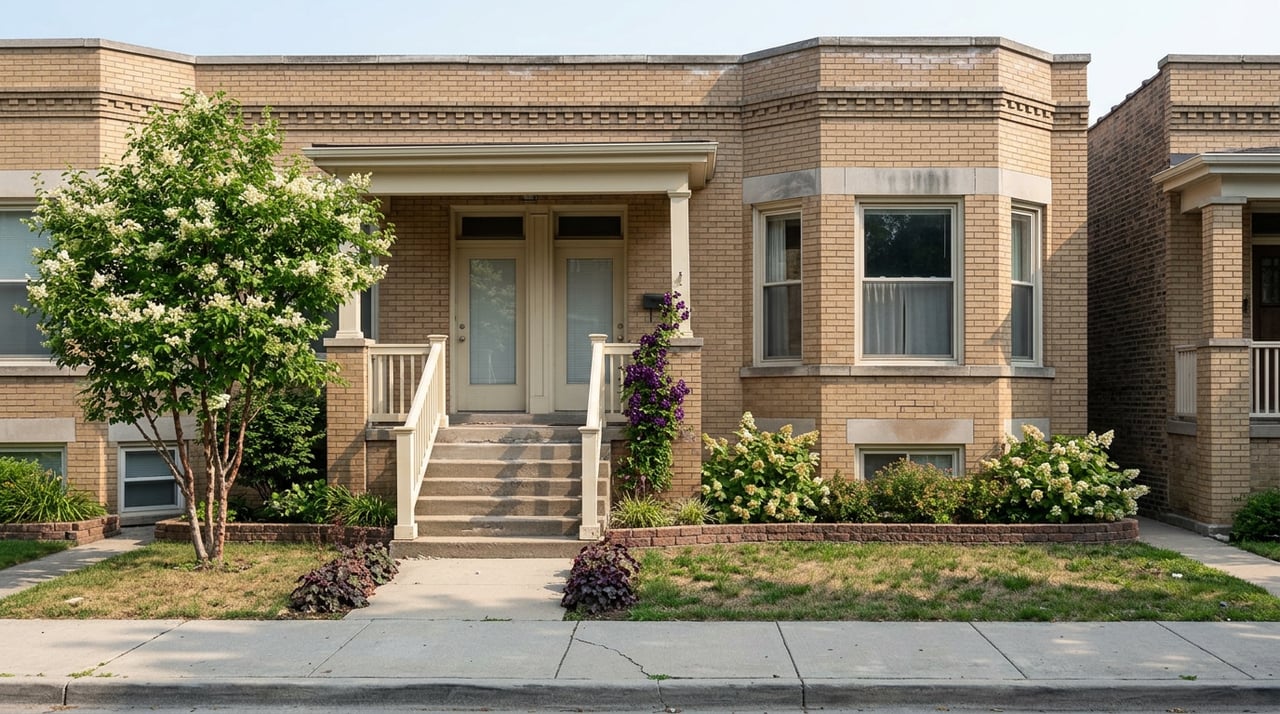
What does it mean when a seller checks "unknown" next to the water service line on an Illinois disclosure form? Most buyers read it as a shrug. In practice it is closer to a legal exit. Illinois law only requires a seller to report what they already know, and it never requires them to test anything first. For a buyer closing on a classic Andersonville two-flat, that single checkbox can leave the most consequential plumbing question in the entire transaction completely open at the exact moment attorney review is winding down.
This matters more in Andersonville than in most Chicago neighborhoods, and the reason has nothing to do with the seller's honesty. It has to do with when these buildings were built.
Why "Unknown" Is a Legitimate Answer, Not an Evasion
The Residential Real Property Disclosure Report that every Illinois seller signs asks about material defects the seller is aware of. It does not require an inspection of the water service line, and it does not require a trip to the basement to look at the pipe entering the building. A seller who genuinely has never had reason to check can answer "unknown" and be entirely within their rights. That answer is not a red flag. It is simply the form working as designed, which is to say designed around what a seller happens to know rather than what a buyer needs to find out.
The gap that leaves behind falls on the buyer to close, and closing it requires a step that has nothing to do with a home inspector's checklist. Lead service lines are a public health and infrastructure question, not a structural one, so they rarely make it onto a standard inspection scope in the way a furnace or roof does.
The Building Stock That Makes This Question Louder Here
Andersonville's residential character is built almost entirely around small multi-unit buildings that predate modern plumbing codes. Roughly 43 percent of housing units in the neighborhood sit inside two- to four-unit buildings, and virtually all of that stock went up before 1940. Lead pipe was not banned in Chicago until 1986. That means the typical Andersonville two-flat or three-flat was built four to five decades before the material was even prohibited, which is a very different starting position than a condo conversion from the 2000s or a new-construction infill project a few blocks away.
This is also a neighborhood where those older buildings carry other original-era plumbing that matters for the same reason: cast-iron stacks, older shutoff configurations, and service connections that have often gone untouched since installation. None of that makes an individual building unsafe. It does make the water line question worth asking directly rather than assuming a "no" by default.
The Tool That Actually Answers the Question
The Chicago Department of Water Management maintains a public lookup tool where anyone can search a specific address and see what the city's records show for that property's service line material. The results generally fall into a few categories, and each one calls for a different next step.
| What the tool shows | What it likely means | What a buyer should do |
|---|---|---|
| Confirmed lead | The public or private portion has been physically verified as lead | Budget for replacement or negotiate before closing |
| Suspected lead | Records point to lead based on building age or installation records, without physical verification | Request a physical check or plan as if confirmed |
| Non-lead | No lead has been identified in city records | Still worth a second look if the building predates 1986 |
| Not found or unclear | Common in older buildings where one service line serves multiple addresses | Call the city directly rather than assume "no result" means "no lead" |
That last row matters more in a neighborhood like Andersonville than it would somewhere with newer, individually metered construction. Multi-unit buildings from this era were often built on shared service connections, and the city's own inventory has acknowledged that many addresses are simply missing from the list because of exactly that kind of shared infrastructure. A blank search result here is not good news. It is an incomplete one.
The Window That Closes Before Most Buyers Think to Look
Illinois requires an attorney to represent both sides of a residential sale, and the standard contract includes a five-business-day attorney review period during which either side can raise issues and negotiate changes before the deal becomes firm. That window is where inspection findings typically get resolved. It is rarely where anyone thinks to run a water line search, because the disclosure form has already come and gone by the time most buyers are focused on furnace age and roof condition.
The city's own water department has been direct about this for years: anyone in a single-family home or two-flat built before 1986 should assume a lead service line exists until they have a reason to believe otherwise. That advice is worth taking literally in Andersonville, and it is worth acting on inside the same five days everything else gets negotiated, not after the ink is dry.
What Changes Once You Know
Finding a confirmed or suspected lead line does not have to derail a purchase. It does change what gets negotiated and how the timeline gets planned.
Independent replacement is a real cost, and the permit and tap fees alone can run into the thousands before a plumber's invoice is even factored in. The city currently offers three paths that can offset that. The Equity Lead Service Line Replacement Program provides free replacement for income-qualified households in priority areas. The Homeowner-Initiated Program waives up to $3,100 in those permit and tap fees for anyone who hires a licensed plumber to handle the replacement on their own schedule, rather than waiting for a city-scheduled crew. The MeterSave Program offers a free replacement in exchange for allowing a smart water meter installation.
Waiting for the city to get to a given address on its own is a longer bet than most buyers expect. The city's submitted replacement plan does not reach full completion until 2076, three decades past the federal deadline that prompted it, and a $325 million federal loan meant to accelerate the work is set to expire at the end of 2026 with a substantial share still unspent as of recent reporting. None of that is a reason to walk away from an otherwise good building. It is a reason to treat a confirmed lead line as a cost to plan around now rather than a problem the city will eventually solve for you.
What This Means If You're Under Contract Right Now
If you are inside an active attorney review period on an Andersonville property, run the address through the city's lookup tool today rather than waiting on the seller's disclosure to settle the question. If the result comes back confirmed or suspected, bring it to your attorney immediately so it can be part of the same negotiation covering inspection items, not a separate conversation after closing. If the address does not appear at all, treat that as incomplete information rather than a clean bill of health, and consider asking whether a physical check is possible before the window closes.
If you are preparing to sell an older two-flat or three-flat, checking your own address ahead of listing gives you the option to address it proactively or price with full information, rather than fielding the question for the first time during someone else's attorney review.
A Few Questions Worth Answering
Does a lead service line mean the water is unsafe to drink? Not automatically. The city notes that having a lead line does not by itself mean elevated lead levels are present, since corrosion control treatment and regular water flow both affect actual exposure. It does mean the line itself is a known long-term liability worth addressing.
Can I request a water test instead of a service line check? A water test tells you about conditions at the moment of the sample. A service line check tells you what is actually in the ground and the walls. For a purchase decision, the line material is the more durable answer.
What if my address shows a shared or unclear service line? This is common in older multi-unit buildings where one line serves more than one address. Contacting the Department of Water Management directly, rather than relying on the online tool alone, is the more reliable path in that situation.
A disclosure form is a starting point in an Andersonville transaction, not a finish line, especially in a neighborhood built almost entirely before the codes that would have made this question moot. Knowing where to look before the window closes is what separates an informed offer from an expensive surprise. The VC Team has spent years working through exactly these details with buyers and sellers across Chicago's North Side, and we're glad to walk through what an address search means for your specific transaction. Start Your Real Estate Journey with a team that reads the fine print before you have to ask.