"Hospitality isn't an add-on for us, it's our foundation from the front door to the kitchen," said Phil Siudak, one of the partners behind ARLA, the restaurant that just took over the top floor at 15 East Oak Street. He was talking about a kitchen. He could just as easily have been describing the whole stretch of Rush and Oak this year, because the block did not simply turn its lights back on. It came back selling something different than what left.
If you have walked that corridor lately and felt like you were seeing double, that instinct is correct, and also slightly wrong. Three storefronts on this two-block stretch went dark within about a year of each other, starting in the fall of 2022. All three eventually reopened. But none of them reopened as what they used to be, and the pattern in what replaced them tells you more about where this neighborhood is heading than any single ribbon-cutting does.
Three Closures, One Very Different Set of Timelines
Tavern on Rush closed at the end of its lease in October 2022, after twenty-five years anchoring the corner of Rush and Bellevue. Carmine's, the Rosebud Restaurant Group's Italian-American flagship at 1037 N. Rush St., served its last meal in February 2023, with ownership initially describing a roughly fifteen-month renovation. Around the same stretch, the sixth-floor restaurant space at 15 East Oak Street, once occupied by Fred's inside the Chicago Barneys, went quiet too, as the department store itself wound down.
Three closures, all within about four months of each other. If you assumed they'd come back on a similar clock, you'd be wrong on every count. Tavern on Rush relocated relatively fast, resurfacing inside the Thompson Chicago hotel. Carmine's took nearly three years, finally reopening on January 20, 2026. The Oak Street space sat empty the longest of all, dark for roughly three years before anyone announced what would take its place.
That gap matters, because what eventually moved in wasn't a faster version of what left. It was a different category of business entirely.
The Rooftop That Replaced a Department Store's Restaurant
ARLA opened June 18, 2026, on the sixth floor of 15 East Oak Street, the exact address where Fred's once served brunch to shoppers working their way through Barneys. The Chicago Star Media report on the opening put the new space at roughly 8,500 square feet, with room for 230 guests indoors and another 60 spread across two open-air terraces, one facing Lake Michigan down Oak Street and the other looking out over Rush.
The restaurant comes from the team behind Adalina Prime and Adalina Italian, working under a new banner called Hospitality Included, and chef Soo Ahn built the menu around Mediterranean flavors filtered through Japanese technique. Food & Beverage Magazine described the space as designed to lean into natural materials and skyline views rather than the retail-adjacent formality of what came before it.
Here's the part worth sitting with. Fred's was a department store's in-house restaurant, built to feed people who were already there to shop. ARLA is an independent, chef-driven destination that exists on its own terms, in a building that no longer sells anything else. The address didn't just change hands. It changed jobs.
From Makeup Counter to AI Hardware
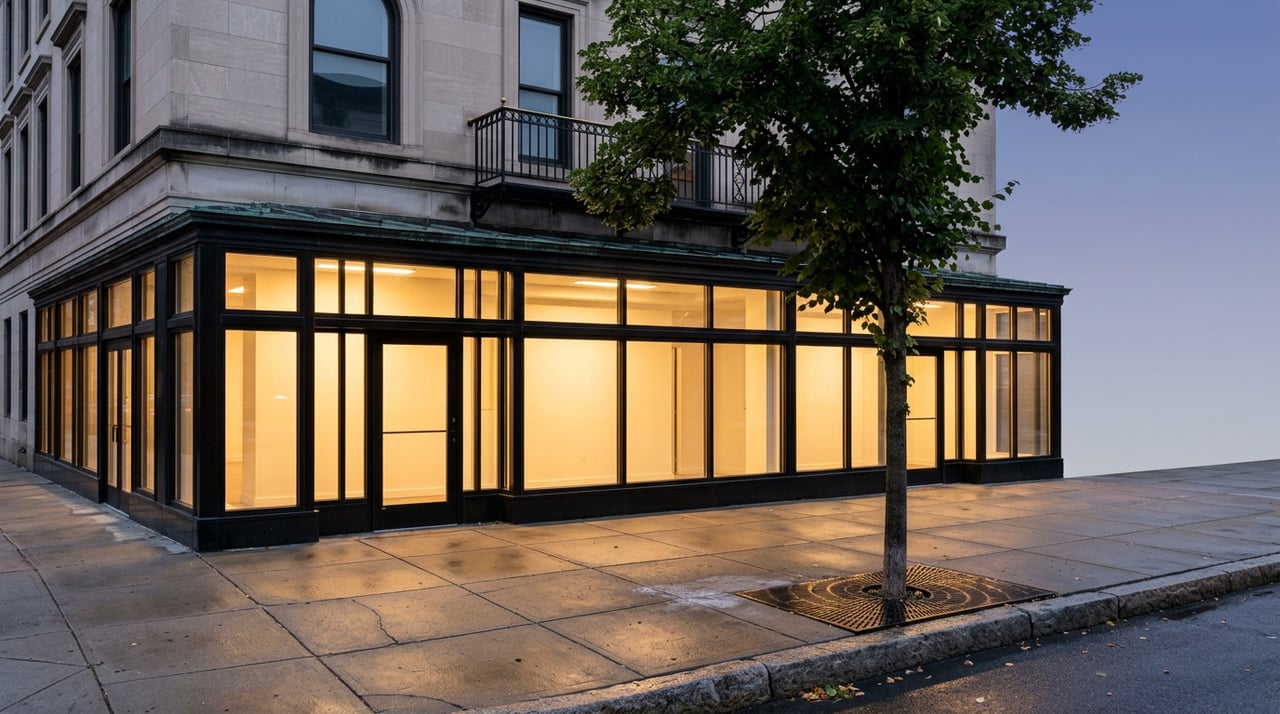
A few doors south on Rush Street, the same swap is playing out in retail. The storefront that Glossier vacated is becoming Meta's first Midwest retail location, a Meta Lab store selling the company's AI glasses and VR headsets, timed to open ahead of the 2026 holiday shopping season.
Put those two facts side by side and the shape of the year gets clearer. A cosmetics brand built around a soft, minimalist retail experience left, and a hardware company selling wearable computers moved in. A department store's restaurant left, and an independent rooftop concept moved in. Neither swap is a like-for-like replacement. Both are categories nobody would have predicted for this specific block five years ago.
Carmine's Came Back Bigger, Not Just Back
Carmine's is the closest thing to a true return on this stretch, and even it didn't come back the same size. The renovation reportedly cost around $4 million, roughly double the original fifteen-month estimate and nearly three years past the original closing date. What reopened on January 20, 2026 is a two-floor supper club with a curved entry staircase, a forty-seat private dining room, and a four-season enclosed terrace overlooking Rush Street and Mariano Park.
The name is the same. The footprint, the price point of the build-out, and the physical experience of eating there are not. Even the one closure on this list that reopened under its original name came back as a larger, more ambitious version of itself.
The Beach Closed Its Books Differently Too
If you're a longtime Gold Coast resident, you probably remember Oak Street Beach's social scene as a drop-in kind of place: you'd walk down, see who was playing, and decide from there. That changed this year. Whispers at Oak Street Beach spent the summer running dated, ticketed nights rather than the walk-up format the beach used to run on, closing out its calendar with a Labor Day event on September 7, from 3 to 9 p.m.
That date has already passed as of this writing, which means the beach's programmed season is officially behind us for the year. It's a small thing on its own. But it's one more example of an old fixture in this neighborhood returning under a different operating model than the one residents grew up with. The sand is the same. The way you find out what's happening on it is not.
A Naming Quirk Worth Knowing Before You Get Confused
One more detail, mostly for anyone planning around it. The Gold Coast Art Fair, now in its 68th year, ran June 20 and 21 this year with around 200 juried artists. It does not happen inside the Gold Coast. It runs at Grant Park's Butler Field, a naming quirk that goes back decades but still catches people off guard if they show up on Oak Street expecting easels. Even the neighborhood's own name gets borrowed for something that technically happens somewhere else, which is a fitting footnote to a year where almost nothing on this stretch came back exactly where or how you'd expect.
What This Actually Means If You Live Here
None of this is a story about a neighborhood bouncing back to what it was. It's a neighborhood trading its own commercial identity for a slightly different one, block by block, storefront by storefront. Dining is shifting from department-store-adjacent formality toward independent, chef-led concepts with their own address and their own reservation book. Retail is shifting from beauty and fashion toward consumer technology. Even a beloved institution like Carmine's came back as a bigger, more considered version of itself rather than a faithful restoration.
If you've lived in the Gold Coast long enough to remember Fred's brunch or a walk-up night at the beach bar, this fall is worth treating less like a comeback tour and more like a first look at what the corridor actually is now. The old landmarks are gone. What replaced them is worth getting to know on its own terms, not as a stand-in for what used to be there.
For residents who've watched this stretch of Rush and Oak sit half-lit for the better part of three years, that's the real story of 2026: not that the lights came back on, but that they're lighting up something new.
Whether you're settled here for good or just keeping an eye on how the neighborhood is changing around you, The VC Team knows this corridor block by block. Start Your Real Estate Journey whenever the timing is right for you.